
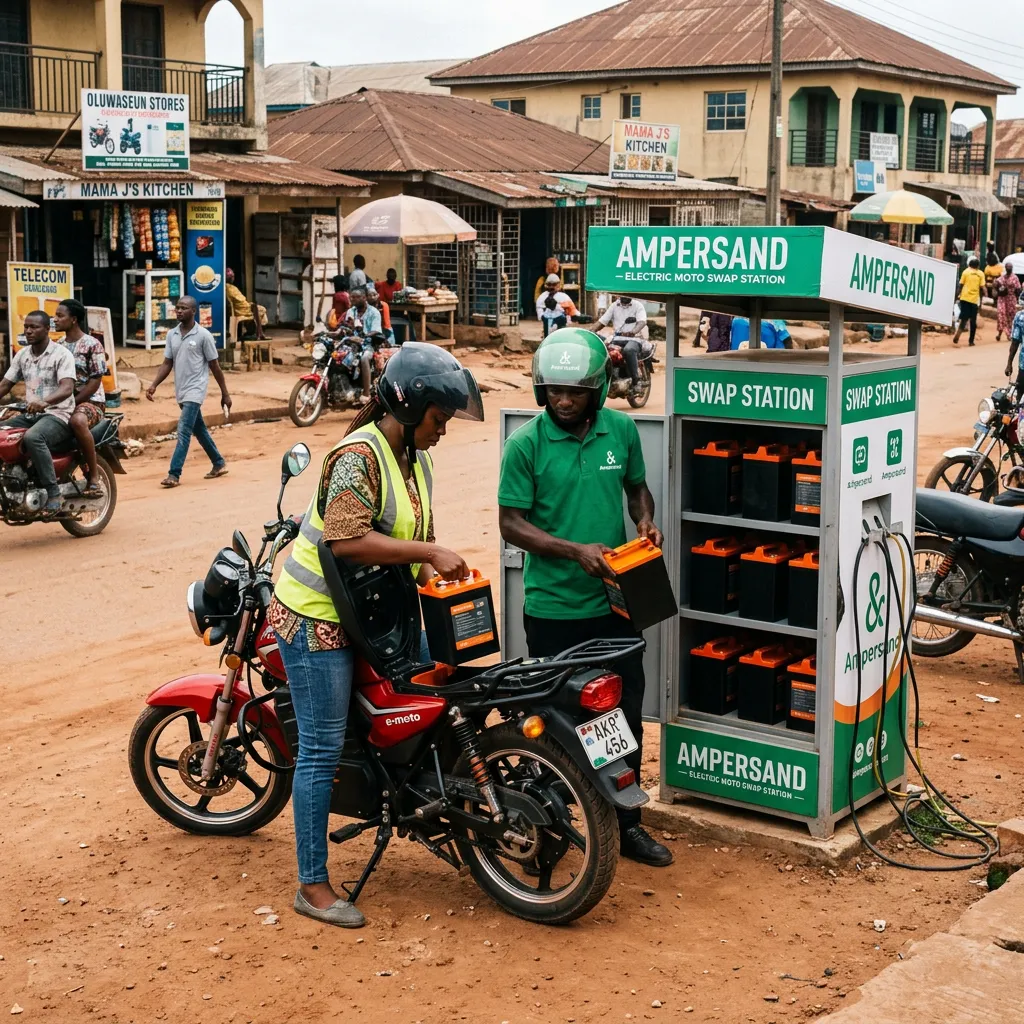

As companies race to electrify Africa’s motorcycle industry, an overlooked network of roadside entrepreneurs, mechanics, and small operators is quietly solving one of the sector’s biggest challenges: keeping riders moving outside major cities.
On a busy morning in Eldoret, a boda-boda rider pulls into a small roadside workshop.
The structure is modest: corrugated iron sheets, a few solar panels mounted nearby, and several batteries lined against a wall. There is no corporate branding. No digital kiosk. No sleek swapping station.
Yet for local riders, places like this can mean the difference between earning a full day’s income and spending hours waiting for a battery to charge.
Across East Africa, electric motorcycles are becoming increasingly visible on roads in Nairobi, Kampala, Kigali, and Dar es Salaam. Companies such as Spiro, Ampersand, Roam, ARC Ride, and Zeno are investing heavily in battery-swapping infrastructure designed to make electric mobility practical for commercial riders.
But beyond the spotlight focused on major cities, another ecosystem is emerging.
It is informal, fragmented, and largely undocumented.
And it may play a critical role in determining whether electric mobility reaches millions of riders operating far from capital cities.
The Infrastructure Gap
Battery swapping has become central to the economics of electric motorcycles.
Unlike conventional charging, which can take hours, swapping allows riders to exchange depleted batteries for charged ones in minutes.
For commercial boda-boda operators, time spent waiting is income lost.
Major companies have responded by building extensive swapping networks.
Kenya-based Roam continues expanding its ecosystem around the Roam Air motorcycle. Rwanda-based Ampersand has developed one of Africa’s most recognized battery-swapping models. Spiro has rapidly deployed thousands of swap stations across multiple African markets.
Yet infrastructure remains concentrated in urban areas.
Outside major hubs, riders often travel longer distances between charging or swapping locations.
This has created opportunities for smaller operators.
The Rise of Informal Swapping Hubs
In secondary towns and transport corridors, entrepreneurs are beginning to fill infrastructure gaps with improvised solutions.
Some purchase imported batteries through informal supply chains.
Others establish small charging stations powered partly by solar systems.
Independent mechanics frequently become unofficial service providers, helping riders troubleshoot battery issues, maintain electrical systems, and access replacement components.
The result is an emerging hybrid ecosystem where formal and informal infrastructure coexist.
Rather than replacing corporate networks, these grassroots operators often extend their reach into areas where investment has yet to arrive.
Why Riders Need Them
For boda-boda operators, reliability matters more than technology.
A rider’s priority is simple: complete more trips each day.
If a nearby mechanic can provide a charged battery faster than a distant swap station, convenience often outweighs brand loyalty.
This practical reality is helping informal networks gain traction.
Many riders operate on narrow margins. Reducing downtime by even an hour can significantly affect daily earnings.
As electric motorcycles become more common, local entrepreneurs are responding to demand with solutions tailored to their communities.
Innovation Born From Constraints
What makes these informal systems particularly interesting is their adaptability.
Operators frequently work around challenges that larger companies might consider prohibitive.
Power outages remain common in some regions.
Grid reliability varies significantly between urban and rural locations.
Battery theft presents ongoing risks.
Import regulations can be inconsistent.
Yet necessity continues to drive innovation.
Solar-assisted charging systems, shared charging arrangements, and cooperative ownership models are beginning to emerge in some communities.
The solutions may not always be scalable, but they demonstrate how local actors adapt technology to fit existing realities.
A Hybrid Future
Industry observers often frame electrification as a competition between established energy systems and new technologies.
On the ground, the reality appears more nuanced.
East Africa’s EV motorcycle transition increasingly resembles a hybrid model.
Formal companies provide vehicles, battery technologies, financing options, and large-scale infrastructure.
Informal entrepreneurs provide flexibility, local knowledge, maintenance support, and last-mile access.
Both ecosystems serve different but complementary functions.
The relationship is sometimes cooperative and sometimes competitive.
Yet together they are accelerating adoption.
Why Secondary Cities Matter
Much of the conversation around African e-mobility focuses on capital cities.
But the future of the sector may depend just as heavily on places like Eldoret, Kisumu, Mbale, Arusha, and dozens of other secondary urban centers.
These locations connect agricultural economies, regional trade routes, and growing populations.
They are also where infrastructure gaps remain most visible.
If electric mobility succeeds only in major cities, its broader economic and environmental impact will be limited.
If it spreads through secondary towns and rural corridors, the implications become far more significant.
The Road Ahead
Governments across East Africa have introduced policies intended to encourage electric mobility and reduce transport-related emissions.
At the same time, Chinese manufacturers continue increasing the availability of electric motorcycles, batteries, and related components across the continent.
Demand is growing.
Technology is improving.
Investment is accelerating.
Yet infrastructure development continues to lag behind adoption in many regions.
This gap has created space for informal innovators to emerge.
Whether regulators choose to support, formalize, or restrict these grassroots networks could shape the next phase of East Africa’s EV revolution.
For now, while major companies dominate headlines, some of the most important work is happening far from corporate launch events and investment announcements.
It is happening in roadside workshops, small charging sheds, and community-run swapping hubs.
And it is helping determine how quickly electric mobility reaches the millions of riders who keep East Africa moving.
Reporting
Riders
- EV boda-boda riders in Eldoret
- EV riders in Kisumu
- Riders using Roam Air motorcycles
- Riders using ARC Ride Bidii Boda motorcycles
Operators
- Independent battery-swapping station owners
- Solar-powered charging operators
- EV mechanics
Institutions
- University of Nairobi mobility researchers
- Makerere University transport researchers
- County transport officials
- SACCO leaders transitioning fleets
Companies
- Roam
- Spiro
- Ampersand
- ARC Ride
- Zeno
Useful Background Sources
- Roam: https://www.roam-electric.com
- Ampersand: https://www.ampersand.solar
- ARC Ride: https://www.arcrideglobal.com
- Zeno: https://www.zenomobility.com