
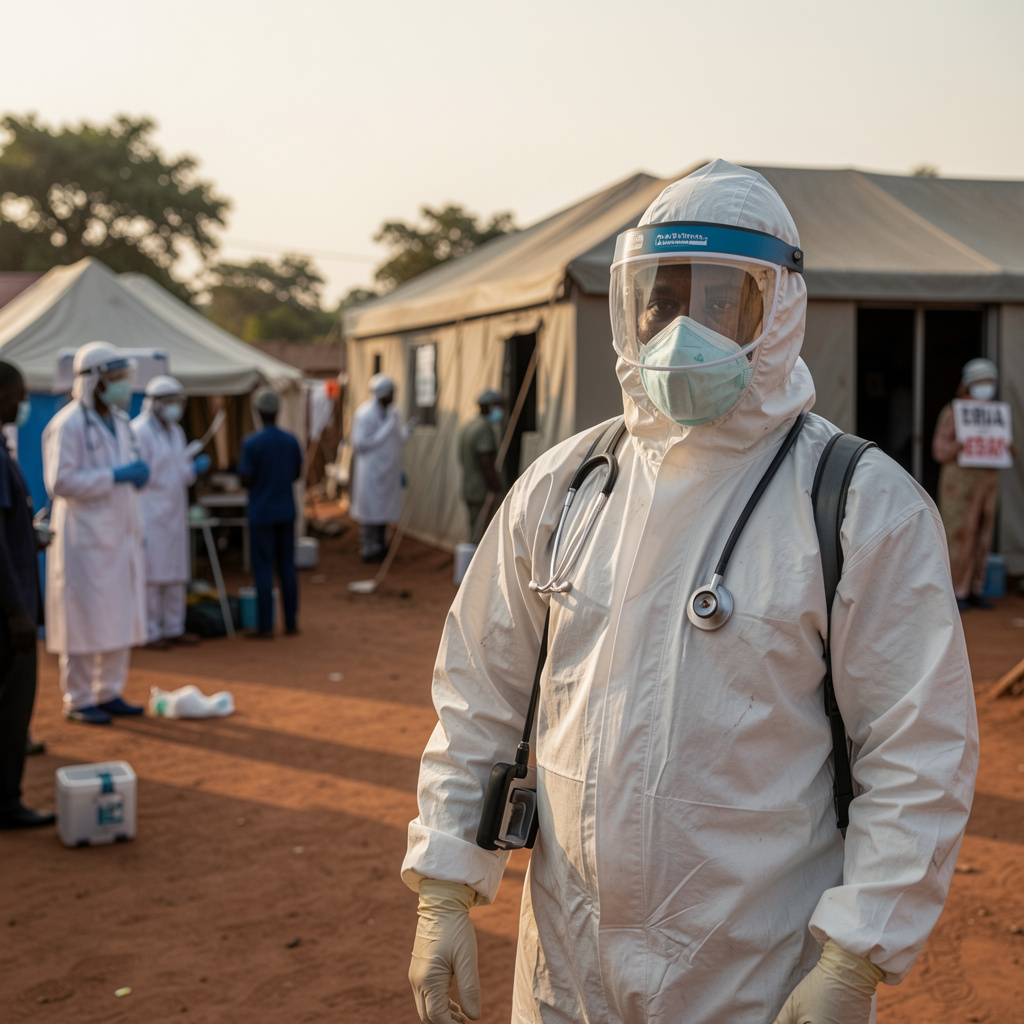

The numbers keep moving, and not in the right direction.
The Democratic Republic of the Congo is seeing one of the fastest jumps in Ebola infections since the latest outbreak was confirmed in May 2026. Every new report seems to push the figures a little higher, and public health officials are now trying to answer a difficult question: How much of the outbreak are they actually seeing?
Officially, the country has recorded 782 confirmed infections and 181 deaths. That’s serious enough. But many experts believe those figures don’t capture the full picture. Ebola was likely spreading quietly before anyone realized what they were dealing with, and once that happens, catching up becomes painfully difficult. Contact tracing has already slipped. That worries me more than the headline numbers.
Then another update arrived.
On June 13 alone, health officials confirmed 72 new cases and 29 deaths—one of the sharpest daily increases since the outbreak began. Three days later, the total climbed again. 837 confirmed cases. 196 deaths. 376 people isolated for treatment. Those aren’t just statistics sitting in a report. They represent hospitals under pressure, families in quarantine, and health workers trying to stay one step ahead of a virus that rarely gives second chances.
Most infections are still concentrated in Ituri Province, although smaller clusters have also been confirmed in North Kivu and South Kivu. That spread isn’t unexpected, but it does make containment harder, especially when health teams can’t trace every contact.
And that’s another problem.
The outbreak wasn’t officially confirmed until May 15, yet investigators believe transmission had already been happening for weeks. According to the Congolese Ministry of Health, contact tracing now covers only 64.4% of identified cases across the affected provinces. That means thousands of interactions simply disappear into the unknown. No epidemiologist likes those odds.
This outbreak is also different from the ones many people remember. Instead of the more familiar Zaire strain, the virus behind the current epidemic belongs to the Bundibugyo strain. There is no licensed vaccine designed specifically for it. No approved treatment either. That changes the conversation completely.
Even so, international health agencies aren’t sounding the alarm over a global pandemic. The U.S. Centers for Disease Control and Prevention continues to classify the risk to the United States as low, and the American missionary who returned from the DRC after possible exposure remained Ebola-free during monitoring.
Still, there are important questions that deserve answers. Why is this outbreak spreading so quickly? Are vaccines finally on the horizon? And should the rest of the world be worried?
To find out, Medical News Today spoke with infectious disease specialist Dr. Monica Gandhi, Professor of Medicine at the University of California, San Francisco. Her answers offer a clearer picture of where the outbreak stands—and what happens next.
Why Is the Virus Spreading So Quickly?
Every Ebola outbreak presents its own challenges. This one arrived with several.
Health officials aren’t just battling a dangerous virus. They’re trying to contain it without a licensed vaccine for the strain responsible, while working in one of the world’s most unstable regions. That’s a difficult combination.
According to infectious disease specialist Dr. Monica Gandhi, the outbreak is being driven by the Bundibugyo strain of the Ebola virus—a far less common member of the ebolavirus family that currently has no approved vaccine or targeted treatment.
“The current Ebola outbreak in the DRC is caused by a strain called the Bundibugyo virus, which is a distinct species of the ebolavirus family without current vaccines or treatments,” Dr. Gandhi explained.
That matters.
Most of the world’s previous Ebola outbreaks, including the devastating West African epidemic between 2014 and 2016, were caused by the Zaire strain. Health systems already have vaccines and response strategies built around that version of the virus. Bundibugyo is different, and that forced scientists and health workers to rethink their approach almost immediately.
The first setback came before the outbreak was even recognized.
Because authorities initially believed they were dealing with the more familiar Zaire strain, early testing failed to identify what was actually spreading through affected communities. Valuable time slipped away.
“This particular outbreak… was initially not detected in the region because authorities did not realize it was caused by Bundibugyo rather than the more common Zaire strain, which requires a different diagnostic test,” Dr. Gandhi noted.
By the time the World Health Organization declared the outbreak a Public Health Emergency of International Concern on May 17, the virus had already gained a foothold in several communities.
From that point on, health workers were left with the tools they’ve relied on for decades: isolate infected patients, trace everyone they may have exposed, and quarantine those contacts before the virus spreads again. It sounds straightforward on paper. In reality, it’s anything but.
Eastern DRC has lived through years of armed conflict and repeated population displacement. Families move without warning. Entire communities relocate overnight. When people are focused on escaping violence, responding to health officials often becomes a secondary concern—and that’s understandable.
For disease investigators, though, it creates a nightmare.
Someone who was identified as a close contact today may be hundreds of kilometers away by next week. Others may never be reached at all. Every missing contact creates another opportunity for the virus to spread quietly.
Dr. Gandhi also believes the global response has become more difficult because international support isn’t what it once was.
“The virus is spreading because it is difficult to track and isolate all exposed cases in the middle of a conflict zone in the DRC where people may be fleeing attacks and not respond to health directives. The U.S. withdrawal from the WHO and the collapse of USAID represent a significant setback for global health containment efforts, as the United States has historically played a major role in supporting international outbreak responses.”
The recent spike in confirmed infections has understandably raised concern. Even so, Dr. Gandhi says the numbers deserve some context.
Not every increase means the virus suddenly became more aggressive.
Sometimes it means health teams have simply become better at finding infections that were already there. Expanded testing and more active surveillance often uncover cases that would otherwise have gone unnoticed. That’s actually a positive sign because every newly identified patient allows health workers to begin tracing contacts sooner.
“The rapid rise in reported cases over a single day could also reflect increased diagnostic testing and active surveillance. Identifying more cases allows health authorities to quarantine exposed contacts earlier, which ultimately strengthens outbreak control efforts,” she added.
For now, that remains one of the strongest weapons available. Until a vaccine specifically designed for the Bundibugyo strain becomes available, early detection, rapid isolation, and effective contact tracing will continue to determine how quickly this outbreak can be brought under control.
Are Vaccines for the Bundibugyo Strain on the Horizon?
One fact continues to shape the response to this outbreak: there isn’t an approved vaccine for the Bundibugyo strain.
That’s a major problem.
Vaccines have become one of the most effective tools for controlling Ebola outbreaks caused by the Zaire strain. Health workers know how to use them, and they’ve helped stop transmission before. This time, though, they’re dealing with a different version of the virus—one that still has no licensed vaccine or targeted treatment.
Researchers didn’t waste time.
“As soon as this outbreak was confirmed to be caused by the Bundibugyo virus, which currently has no licensed vaccine available, the race to develop a vaccine candidate began,” Dr. Monica Gandhi said.
One of the first questions scientists asked was whether Ervebo, the vaccine already approved for the Zaire strain, could offer some level of protection.
The World Health Organization reviewed the available evidence. After weighing what was known—and what wasn’t—experts decided the vaccine shouldn’t be rolled out for general use against Bundibugyo. Right now, they believe it should only be used in carefully controlled research settings until stronger evidence becomes available.
That decision may sound cautious, but it’s a reminder that vaccines aren’t automatically interchangeable. What works well against one strain doesn’t always work against another.
The focus has now shifted to building vaccines specifically designed for Bundibugyo.
Among the most closely watched projects is an rVSV Bundibugyo vaccine being developed by the International AIDS Vaccine Initiative (IAVI). Researchers are optimistic, but they aren’t promising quick results.
“The rVSV Bundibugyo vaccine is one of the most promising candidates currently under development. However, it is unlikely to be ready for clinical trials for another seven to nine months,” Dr. Gandhi explained.
And that’s only one project.
Scientists are testing several other approaches as well, including another viral vector vaccine and an mRNA-based candidate. The success of mRNA technology during the COVID-19 pandemic has generated plenty of interest, but developing an entirely new Ebola vaccine is a different challenge. Every candidate has to go through laboratory research, safety studies, and clinical trials before it can be considered for widespread use. There’s no realistic shortcut.
“In addition to the rVSV candidate, another viral vector vaccine and an mRNA vaccine are also being developed, although neither is expected to be ready for clinical testing in the immediate future,” she added.
So while vaccine research is moving forward, it won’t change the course of this outbreak overnight.
For the months ahead, the response will continue to depend on the basics: finding cases early, isolating infected patients, tracing their contacts, and earning the trust of communities where the virus is spreading. Those measures may not attract headlines, but they remain the strongest defence available today.
Still, there is reason for cautious optimism.
If even one of these vaccine candidates proves safe and effective, future outbreaks caused by the Bundibugyo strain could be detected and contained much faster than what the Democratic Republic of the Congo is facing today.
Should the World Be Concerned About Global Spread?
Whenever Ebola cases begin climbing, the same question usually follows.
Could this become another global health emergency?
It’s a fair question. The images coming out of eastern DRC are unsettling, and the numbers continue to rise. But based on what experts know today, the answer is probably no.
Dr. Monica Gandhi believes the virus itself is one of the biggest reasons for that confidence.
“Ebola spreads through direct contact with the body fluids of an infected person or someone who has died from the disease,” she explained.
That makes Ebola very different from viruses like COVID-19 or influenza.
You can’t catch Ebola simply by sharing the same room with someone who is infected. It doesn’t spread through the air, and people who have been exposed but haven’t developed symptoms aren’t known to pass the virus on to others. Those characteristics slow transmission in ways that respiratory viruses simply don’t.
That doesn’t make Ebola any less dangerous. It just makes it more predictable.
Public health teams know what works. Find infected patients quickly. Isolate them. Identify everyone they’ve been in close contact with. Monitor those contacts before they become sick. It’s painstaking work, and honestly, it isn’t glamorous, but outbreak after outbreak has shown that it saves lives.
“Since the virus is not spread by respiratory droplets and is not transmitted before symptoms develop, we believe this outbreak can be contained without global spread, provided effective contact tracing, isolation, and quarantine measures remain in place,” Dr. Gandhi said.
The challenge isn’t the science.
It’s whether those measures can actually be carried out in communities facing armed conflict, limited healthcare services, and shrinking international support. Even the best outbreak response plans begin to fall apart when health workers can’t safely reach affected families.
That’s why many experts are watching the response just as closely as they’re watching the virus itself.
Dr. Gandhi argues that sustained international cooperation will remain essential throughout the outbreak.
“Containing outbreaks like this requires strong public health systems, continued international cooperation, and sustained support for organizations such as the World Health Organization. At the same time, the race to develop effective vaccines and treatments must continue for as long as the outbreak persists,” she concluded.
Looking Ahead
The outbreak unfolding in the Democratic Republic of the Congo is another reminder that infectious diseases don’t disappear simply because they’re no longer making global headlines.
This response is being tested on several fronts. A less familiar strain of Ebola. No licensed vaccine. Communities already dealing with insecurity. None of those challenges has an easy fix.
Even so, there are reasons to remain hopeful.
Researchers are working against the clock to develop vaccines specifically for the Bundibugyo strain. Health workers continue to trace contacts, isolate patients, and educate communities despite enormous logistical challenges. Those efforts rarely attract the same attention as daily case numbers, but they’re the reason previous Ebola outbreaks have eventually been brought under control.
What happens next won’t depend on a single breakthrough or one promising vaccine candidate. It will depend on thousands of small decisions made every day—by scientists, healthcare workers, governments, and communities themselves.
And for now, that work continues.